Pest Control Guide • June 10, 2026
How to Get Rid of Ants in the House — What Actually Works in Southern California
Why DIY sprays make Argentine ant problems worse, what does work, and how to keep them away.
SP
Sydney Pardey
Owner, Al & Sons Termite and Pest Control
8 min readUpdated June 10, 2026
AntsArgentine AntsPest ControlSoCal Homeowner
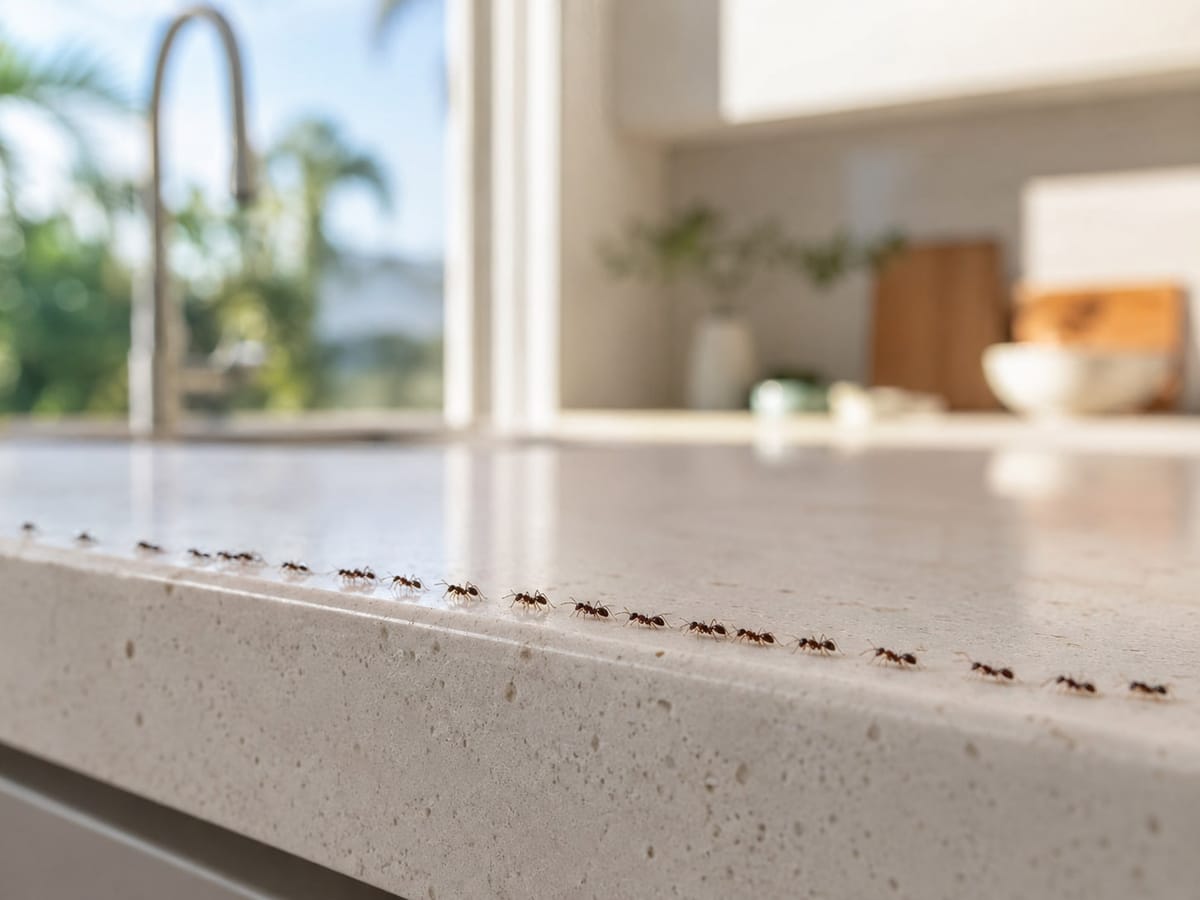
If you live in Southern California, you don't really have an ant problem. You likely have an Argentine ant problem. Almost every ant trail across a kitchen counter from Redondo Beach to Sherman Oaks, from Long Beach to Thousand Oaks, traces back to the same species — one that operates so differently from the ants most of the country deals with that the standard advice about getting rid of ants simply doesn't work here.
Spraying the trail makes it worse. Setting out the wrong bait does nothing. Sealing every crack you can see won't stop them. Every summer, homeowners across SoCal spend hundreds of dollars on the wrong products, get frustrated, and eventually conclude that ants are just something you live with. They're not. But getting rid of them requires understanding what you're actually dealing with — and using a method that matches the biology.
Quick Answer
How do I get rid of ants in my house in Southern California?
Don't use contact sprays — they cause Argentine ant colonies to split and spread the problem. The reliable approach is slow-acting sugar-based bait placed directly on active trails, where worker ants carry it back to the queens and the entire colony eats it. Reduce moisture indoors (fix leaks, empty pet water bowls at night), eliminate food residue, and address conducive conditions outside (irrigation against the foundation, mulch touching siding). Visible activity should drop significantly within two to three weeks of professional treatment. A professional perimeter and bait program is the only durable solution against SoCal's regional supercolonies.
The Short Version
- Argentine ants are the dominant species across all of Southern California — and they behave very differently from other ants.
- Contact sprays cause colony budding, which spreads the problem to new areas of the home.
- Slow-acting sugar-based liquid bait is what actually reduces colonies — it works at the queen, not the trail.
- Indoor activity is almost always driven by outdoor conditions: dry soil, irrigation cycles, or food sources outside.
- Persistent infestations require professional perimeter treatment combined with targeted baiting.
What you're dealing with
First, Understand What You're Dealing With
Most of the country has multiple ant species competing with each other across small territories. A single front yard might have three or four colonies actively fighting for resources, and each colony has one queen and a few thousand workers. Standard "get rid of ants" advice — caulk the entry points, set out a few bait stations, spray any visible trails — works in that environment because you're dealing with a contained problem.
Southern California doesn't have that. We have one dominant species — Linepithema humile, the Argentine ant — and it operates as a single interconnected supercolony spanning hundreds of miles. The colony that's foraging across your kitchen counter is biologically the same colony as the one in your neighbor's yard, the one across the street, and the one three blocks over. They don't fight each other. They share food trails, recognize each other as nestmates, and have hundreds of queens distributed across thousands of nests.
That has two practical consequences for getting them out of your house. First, there's effectively no limit to the supply of workers — every ant you kill is replaced. Second, the colony responds to stress (chemical spray, environmental disruption) by budding: splitting into multiple sub-colonies that disperse and establish in new locations. So aggressive treatments that work against most ants actually make Argentine ant problems significantly worse.
Why they come inside
Why Argentine Ants Come Inside in the First Place
Argentine ants don't move into your home. They live outdoors in shallow nests under landscaping, in mulch, under stepping stones, in irrigation valve boxes, and along the foundation. Workers travel up to 200 feet from the nest looking for food and water, and your home is a stop on their route — not their destination.
The triggers for indoor activity follow predictable patterns across SoCal. Dry soil in summer is the biggest one — as outdoor moisture disappears, ants follow water trails inside, which is why kitchens and bathrooms become primary targets in July and August. Heavy rain in winter floods outdoor nests and drives workers indoors looking for dry shelter. Honeydew sources nearby — aphids, scale insects, or whiteflies on landscaping — feed Argentine ant colonies massively; a heavily infested ornamental plant near your house can support a population a hundred times what would otherwise survive there. And food residue on counters, in pet bowls, or in trash cans provides the reason for any forager that's already entered the house to stay and recruit more workers.
Understanding the trigger matters because it tells you what to fix. Ants in the kitchen during a July heat wave aren't the same problem as ants in the bathroom after a January storm — but both have the same root cause: outdoor conditions pushing workers inside.
What backfires
What Doesn't Work — and Often Backfires
Contact sprays on trails.
This is the single biggest mistake homeowners make with Argentine ants. The aerosol can of ant killer from the hardware store kills the visible ants, makes the trail disappear, and feels like progress. What actually happens: the colony detects the chemical stress on that trail and responds by budding — splitting off sub-colonies that establish new nests in different locations. Two weeks after spraying, you have ants in three rooms instead of one, and the new entry points are harder to find. We get calls from homeowners every summer who started with a single ant trail and created a multi-room infestation with a $9 can of spray.
Pure boric acid, diatomaceous earth, and natural repellents.
Pepper, cinnamon, peppermint oil, vinegar, and other natural deterrents create temporary disruption but don't reduce the colony. Diatomaceous earth requires direct contact and only kills the surface workers it touches. None of these reach the queens, which is the only place where the population is actually being generated.
Generic bait stations from the hardware store.
Most over-the-counter ant bait stations contain a protein-based bait, which works on many ant species but is the wrong formulation for Argentine ants. Argentine ants are sugar-feeders during the warm months when most homeowners are dealing with them — they ignore protein bait almost entirely. The bait sits there, the homeowner concludes the ants aren't taking it, and switches back to spray. The bait wasn't the problem; the formulation was.
Sealing every crack you can see.
Argentine ant workers can squeeze through openings as narrow as 1mm — including gaps you'd never identify as entry points. Sealing the obvious cracks reduces some access but doesn't solve the problem if outdoor pressure is high. It's a supplement to professional treatment, not a substitute.
What works
What Actually Works
The method that reliably reduces Argentine ant populations is slow-acting sugar-based liquid bait placed directly on active trails. The bait contains a small amount of insecticide (usually borate-based at low concentration) mixed with a sweet attractant. Workers feed on it, return to the nest, and feed it to other workers and to the queens through a process called trophallaxis. The slow action is intentional — workers need to live long enough to spread the bait through the colony before the active ingredient takes effect.
For infestations, professional service combines exterior perimeter treatment with targeted bait stations placed along the outdoor travel routes. This addresses the colony where it actually lives — in the yard — rather than just chasing workers indoors. A professional program also addresses conducive conditions on the property: irrigation patterns, mulch placement, aphid-infested plants, and moisture sources that are sustaining the colony pressure pushing workers into your home.
Why professional treatment is right
Why Professional Treatment Is the Right Call
Argentine ant control in Southern California isn't a problem that responds well to a series of retail products tried one after another. The biology of the species — the supercolony structure, the budding response to chemical stress, the sugar-feeding preference that makes most hardware store baits ineffective — means that well-intentioned DIY attempts frequently make the situation worse before giving up entirely.
Professional ant control is a different protocol than what most homeowners picture when they think about "spraying for ants." It combines an exterior perimeter application using non-repellent products that don't trigger budding, targeted bait stations placed at the outdoor harborage points where the colony actually lives, interior bait where appropriate, and adjustment of any conducive conditions on the property. The goal isn't killing every worker — it's reducing the colony at its source while making the structure less attractive over time.
The other practical consideration: Argentine ant supercolonies are effectively unlimited in the supply of workers they can send toward a food or water source. A retail treatment that doesn't address the colony itself — just the visible trail — is fighting against a population that will persistently replace whatever it loses. A professional program that establishes perimeter suppression and targets the colony creates a durable reduction in pressure rather than a temporary interruption.
A practical homeowner checklist — what you can control
Don't spray No aerosols, no contact insecticide, nothing repellent applied to a visible trail. This is the single most important rule. Put the can down.
Fix the moisture source Check under sinks for leaks. Empty pet water bowls overnight. Look for condensation on cold water pipes inside cabinets. Argentine ants in summer are usually water-seeking.
Clean food residue and remove attractants Wipe counters, sweep floors, store pet food in sealed containers, take out trash regularly. Don't leave dishes in the sink overnight during peak summer weeks.
Address outdoor conditions Trim landscaping back from the foundation, keep mulch a few inches off the siding, treat any aphid or scale infestation on ornamental plants near the house. The colony lives outside; reducing outdoor support reduces indoor pressure.
Call a professional Argentine ant pressure in Southern California is a regional, structural issue that benefits from a professional perimeter and bait program. The sooner a proper program is established, the less accumulated damage the colony does in your wall voids and harborage areas.
Why this is a SoCal problem
Why Argentine Ants Are Specifically a SoCal Problem
Argentine ants are an invasive species, originally from northern Argentina, that arrived in California in the late 1800s and have been displacing native ant species across the state ever since. Southern California's Mediterranean climate is essentially ideal for them — warm year-round, with seasonal moisture cycles that match their biology. The same climate that makes SoCal a great place to live makes it permanent prime habitat for the species.
Other parts of the country have other ant problems. The Southeast has fire ants. The Northeast has carpenter ants. The Midwest has pavement ants. Almost all standard ant-control advice on the internet is written for those species, which is part of why so many SoCal homeowners get bad results from following it. Argentine ants need their own playbook — and the right playbook works reliably once you have it.
Persistent ant problem you can't seem to solve?
Al & Sons has been treating Argentine ant infestations across the South Bay and greater Los Angeles since 1960. If you've tried products at home and still have activity, or if ants are showing up in multiple rooms, we'd be happy to take a look and give you an honest assessment of what's driving the pressure and what a professional program would look like for your specific situation.
Common questions
SoCal Ant Control FAQs
Common questions from Southern California homeowners about getting rid of ants.
Q
How long does it take for ant treatment to work?
A
For Argentine ants treated with a professional sugar-based liquid bait program, expect visible reduction in activity within two to three weeks. The first three to five days may show more ants at the bait spot — that's the colony actively feeding and recruiting more workers, which is what spreads the bait to the queens. The temptation to add sprays during this phase is the most common reason treatment timelines extend. Perimeter spray treatments work on a different timeline — products contact and kill workers immediately but build a residual barrier that reduces incoming pressure over two to four weeks.
Q
Why do the ants keep coming back?
A
Because the colony lives outside, and the underlying conditions driving them inside haven't been fully addressed. Argentine ant trails return when the outdoor trigger is still present — usually moisture-seeking in summer, shelter-seeking after winter rain, or food residue inside that's recruiting foragers. Professional treatment reduces the colony and suppresses outdoor pressure, but if significant conducive conditions remain — heavy irrigation against the foundation, aphid-infested plants adjacent to the structure, consistent food sources indoors — pressure will rebuild between service visits. This is why conducive condition management is part of what a good professional program addresses.
Q
Are ants in my house a sign that something is dirty?
A
No — Argentine ants will trail into the cleanest home in Southern California if conditions outside are pushing them inside. Dry summer soil drives workers to seek moisture indoors regardless of how clean the home is. That said, food residue and standing water indoors will recruit more workers once they're already inside, so cleanliness affects the severity of the problem even if it didn't cause it.
Q
Will the ants damage my house?
A
Argentine ants don't cause structural damage — they don't chew wood or wiring like carpenter ants or termites. The damage is indirect: they can short out electrical equipment when nesting in outlets or appliances, they contaminate food they've trailed across, and during winter rain events they can establish nests inside wall voids that are difficult to remove. The most common "damage" is to your patience and your relationship with your house.
Q
Is there a way to keep Argentine ants away permanently?
A
No — they're a regional, permanent presence in SoCal, and permanent exclusion isn't realistic. What is realistic is keeping the pressure low enough that you don't have recurring indoor activity. That means consistent professional perimeter treatment that suppresses outdoor colonies near the structure, attention to conducive conditions (irrigation, mulch, landscaping), and prompt response to any trail that appears before it has a chance to recruit larger numbers of workers. Done consistently, this keeps the indoor experience essentially ant-free even though the regional population is unchanged.
Related Reading
- How to stop Argentine ants from taking over your homeA deeper look at Argentine ant biology and behavior.
- 5 pests that never stop causing problems in Southern CaliforniaThe year-round pests every SoCal homeowner should know.
- Why your backyard is a bug magnetHow outdoor conditions drive indoor pest pressure.
- Our general pest control serviceRecurring perimeter treatment for South Bay homes.
- Argentine ants pest libraryThe dominant ant species across all of SoCal.
SP
About the Author
Sydney Pardey·Owner, Al & Sons Termite and Pest Control
SPCB Field Representative License No. FR 72134SPCB Company License No. 10102
Sydney Pardey is the owner of Al & Sons Termite and Pest Control, a family-owned pest control company serving the South Bay and greater Los Angeles area since 1960. All content is written from direct operational experience and reviewed against current California Structural Pest Control Board standards.
Our LegacyServing Southern California
Serving Southern California
Since 1960.
Al & Sons is more than a business—it's a family legacy. For over 60 years, we've been local neighbors, committed to serving our community across Southern California with the same integrity and care when the business was started in 1960.
100%
Family Owned
SoCal
Local & Dedicated