Regional Guide • June 23, 2026
South Bay vs. Westside vs. Valley — How Pest Pressure Differs Across Los Angeles
Why the pest problems in Redondo Beach aren't quite the same as the ones in Sherman Oaks — and what your specific neighborhood's climate, landscape, and housing stock mean for what you're likely to encounter.
SP
Sydney Pardey
Owner, Al & Sons Termite and Pest Control
8 min readUpdated June 23, 2026
Regional GuideSouth BayLos AngelesSoCal Homeowner
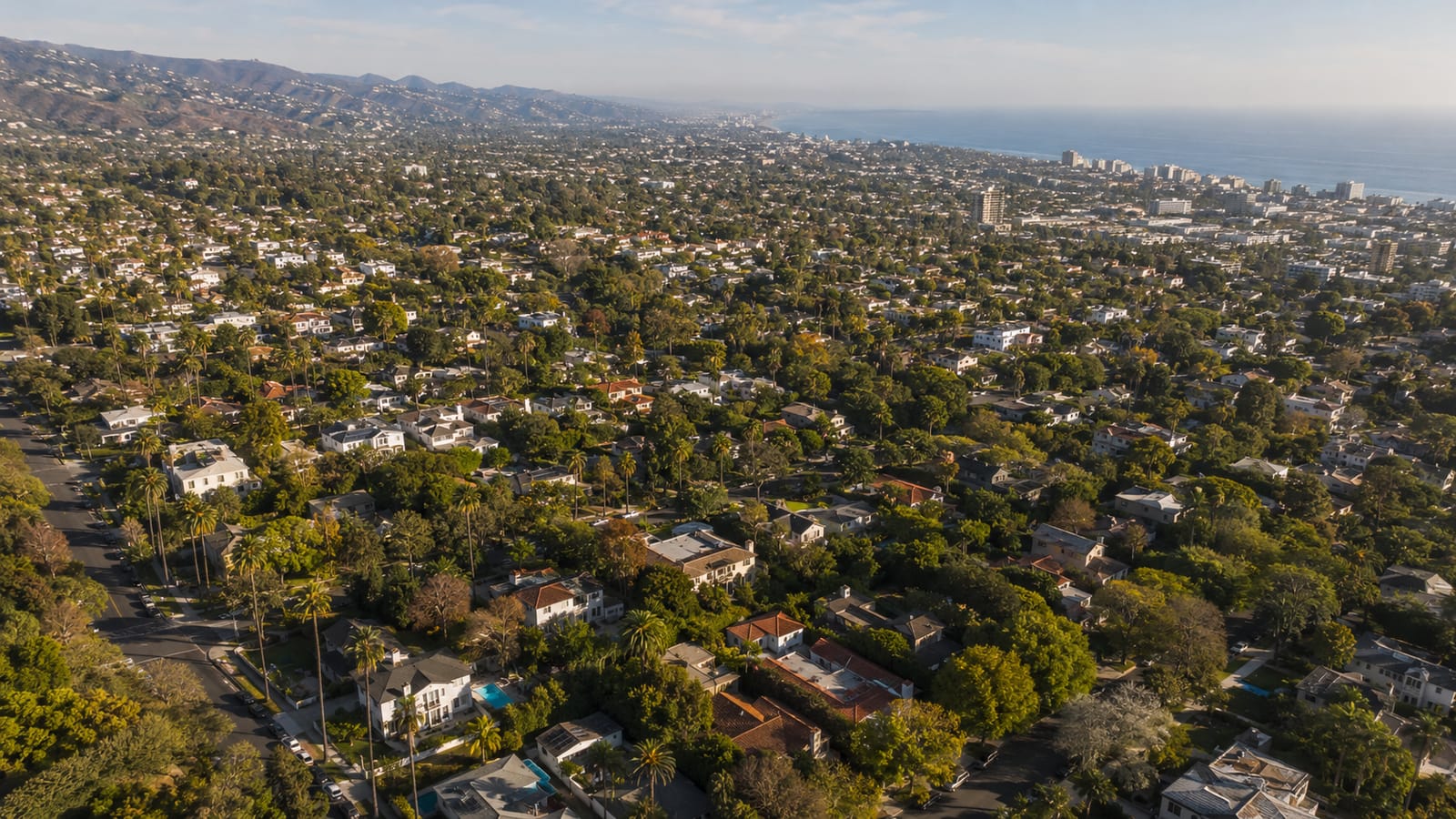
Los Angeles is often talked about as a single place with a single climate, but anyone who's lived here knows that's not quite right. The South Bay in late June has the marine layer burning off by noon, temperatures in the mid-60s, and a persistent coastal humidity that defines the whole season. Sherman Oaks in the same week is hitting 95°F by early afternoon with single-digit humidity, radiant heat off the asphalt, and Santa Ana conditions that feel like a different state entirely. Pasadena has its own microclimate. Brentwood and Pacific Palisades are different from Venice. The Valley is different from the coast.
Those differences in climate, vegetation, water access, housing age, and landscape density don't just affect how you dress or how you run your air conditioner. They directly shape which pests concentrate where, when they peak, and how severe the pressure tends to be. A pest control service that treats a Redondo Beach bungalow and a Studio City hillside home the same way is either very lucky or not paying attention.
Quick Answer
Does pest pressure vary across different parts of Los Angeles?
Yes, significantly. The South Bay and coastal communities have year-round Argentine ant pressure driven by marine humidity, moderate termite risk, and increasing roof rat activity as regional populations grow. The Westside — from Santa Monica to Brentwood to Pacific Palisades — combines coastal conditions with older, more diverse housing stock and higher termite pressure from mature structural wood. The San Fernando Valley has the highest cockroach pressure in residential settings, the most significant rodent activity (driven by heat, construction, and commercial density), and intense seasonal pest spikes in summer that exceed coastal communities. Altitude, proximity to wildland, soil type, and irrigation patterns all modify pest pressure within each zone.
The Short Version
- Climate, housing age, landscape type, and proximity to commercial areas all shape pest pressure by neighborhood.
- The South Bay has persistent ant and termite pressure — coastal humidity drives both year-round.
- The Westside's older housing stock increases drywood termite risk significantly.
- The Valley has the most intense summer pest spikes — extreme heat accelerates cockroach and rodent breeding cycles.
- Foothill and canyon communities face the highest wildland-interface pest pressure — scorpions, rats, and spiders.
- Understanding your zone's specific pressures helps you prioritize prevention and service timing.
Why geography shapes pest pressure
Why Geography Shapes Pest Pressure
Before going zone by zone, it's worth understanding the underlying mechanisms — because they explain patterns that otherwise seem arbitrary.
Temperature.
Insect and rodent reproduction cycles are directly temperature-dependent. Warmer conditions compress development timelines — a German cockroach that takes 12 weeks to develop in a 65°F environment may take only 6 weeks at 85°F. The Valley's consistently higher summer temperatures mean pest populations build faster and peak higher than coastal communities experiencing the same calendar month.
Humidity.
Many pest species — subterranean termites, German cockroaches, grain mites, silverfish — require or are strongly supported by humidity. Coastal marine layer keeps relative humidity elevated in the South Bay and on the Westside, which supports year-round populations of moisture-dependent species. The Valley's lower humidity works against some species but in favor of others — roof rats, which are more drought-tolerant, and bark scorpions from adjacent desert-interface areas.
Housing age and construction type.
Older housing has more accumulated wood for drywood termites, more gaps and cracks from decades of settling, and more deferred maintenance (aging vent screens, deteriorated sill plates, unaddressed rot) that creates pest entry and harborage. The South Bay and Westside have significant concentrations of 1950s to 1970s construction. The Valley has both very old stock and very new development — with the construction boom of new development creating rodent displacement pressure.
Landscaping density and type.
Dense mature landscaping — English ivy, bougainvillea, mature fruit trees, large palm canopies — creates harborage for black widows, roof rats, and Argentine ants. Communities with older, more established residential landscaping have significantly higher pest pressure than newer developments with younger, sparser plantings.
Proximity to commercial corridors and undeveloped land.
Commercial food service concentrations drive rodent populations. Proximity to undeveloped hillside, riparian areas, or wildland drives more wildlife-adjacent pest activity, including scorpions and canyon-adjacent rodents.
The South Bay
The South Bay — Coastal Humidity, Persistent Ants, Growing Rodent Pressure
The South Bay — Redondo Beach, Manhattan Beach, Hermosa Beach, El Segundo, Torrance, Palos Verdes, San Pedro, Lomita, and the surrounding communities — has a distinct pest profile shaped primarily by its coastal climate.
Ants
Argentine Ants
High AlertYear-round
The marine layer that makes South Bay summers comfortable for people creates exactly the conditions Argentine ant supercolonies thrive in. Consistent ground moisture, mild winters that prevent die-offs, and a densely residential landscape with continuous irrigation means the regional ant population is active 12 months a year. Unlike drier inland areas where ant pressure is clearly seasonal, South Bay homeowners experience foraging pressure in every month — particularly in kitchens and bathrooms. The surge peaks in late summer (when outdoor soil dries between irrigation cycles) and again after heavy winter rains (when flooded outdoor nests push workers inside).
Termite
Drywood Termites
High AlertYear-round, swarms September–November
The South Bay's coastal humidity, combined with housing stock that's predominantly 50 to 70 years old, creates a high-risk environment for drywood termites. The species thrives in the moisture range that coastal conditions provide — not wet, but consistently humid — and the accumulated structural wood of mid-century bungalows and craftsman homes provides decades of food source. Annual or biennial inspections are genuinely warranted here, not optional.
Rodent
Roof Rats
Moderate AlertIncreasing year-round
Roof rats have historically been somewhat less prevalent in the South Bay than in central LA, but the regional population increase over the past decade has changed that. The combination of mature fruit trees (citrus is everywhere), dense ornamental landscaping, and aging housing with deteriorating exclusion points has supported a significant increase in residential roof rat calls across the area. Homes near ravines, brushy hillsides, and the South Bay's occasional wooded corridors see the most pressure.
Arachnid
Black Widows
Moderate AlertPeak August–October
Coastal conditions support black widow populations at moderate levels — not as high as drier, hotter inland areas, but present year-round. Garages, outdoor storage, and dense landscaping create the harborage that supports consistent populations.
What South Bay homeowners should prioritize: year-round perimeter ant service with a bait program component; biennial termite inspections as baseline, annual for older homes; roofline exclusion assessment if you have mature fruit trees or frequent roof rat signs; and late summer professional black widow treatment of garage and outdoor storage.
The Westside
The Westside — Older Housing, Higher Termite Risk, Canyon Wildlife Pressure
The Westside — Santa Monica, Brentwood, Pacific Palisades, Culver City, Venice, Marina del Rey, West Los Angeles, and the canyon communities — combines coastal conditions with some of the oldest and most architecturally diverse housing stock in greater LA.
Drywood termites represent the highest pressure on the Westside of any residential zone in LA. Homes from the 1920s through the 1950s in Brentwood, Pacific Palisades, and the older parts of Santa Monica have structural wood that's been exposed to swarming drywood termites for decades. Multiple past treatments, evidence of prior infestation, and active colonies coexist in many homes — not because they've been poorly maintained, but because the species simply has more accumulated history in older structures. Westside homeowners who have owned their homes for 20 or more years and haven't had a formal WDO inspection recently are statistically likely to have evidence of termite activity somewhere in the structure.
Canyon and hillside communities — significant wildlife interface
Homes in Topanga Canyon, the Pacific Palisades canyons, the hills above Brentwood, and similar communities face a pest profile that's meaningfully different from flat coastal communities. The wildland-urban interface brings different pressures:
Roof rats from wildland habitat.
Canyon-adjacent properties receive sustained roof rat pressure from surrounding wildland that flat coastal properties simply don't experience. The rodent population in adjacent undeveloped land is large and persistent, and any gap in roofline exclusion is found and exploited quickly.
Scorpions.
California's most common scorpion — the stripe-tailed scorpion — is present in foothill and canyon communities in ways it's not in flat coastal zones. Found under loose bark, in woodpiles, under rocks, and occasionally inside structures near ground-level entry points.
Argentine ants apply the same year-round coastal pressure on the Westside as in the South Bay. Canyon-adjacent properties in particular support larger and more geographically complex ant supercolonies due to the diversity of landscape types from manicured gardens to naturalistic plantings.
What Westside homeowners should prioritize: formal WDO inspection every one to two years — non-negotiable for homes over 40 years old; canyon-adjacent properties warrant annual roofline exclusion assessment and scorpion awareness; year-round ant service consistent with the South Bay approach; and dense landscaping management to reduce rodent and spider harborage.
The Valley
The San Fernando Valley — Heat-Amplified Pest Cycles, Rodent Hotspots, Commercial Pressure
The San Fernando Valley — Sherman Oaks, Studio City, Burbank, North Hollywood, Van Nuys, Encino, Woodland Hills, Chatsworth, Reseda, Canoga Park, and the surrounding communities — has the most intense peak pest season of any residential zone in greater LA, driven primarily by its climate.
Cockroach
German Cockroaches
High AlertYear-round, peaks July–September
The Valley's combination of heat, older multi-family housing stock, commercial food service corridors, and urban density creates the highest concentration of German cockroach activity in the greater LA residential market. The heat compresses cockroach development cycles dramatically — populations that build over months on the coast can double in weeks in Valley kitchens during summer. Multi-family housing with shared plumbing creates migration pathways between units that coastal single-family home owners don't experience.
Rodent
Roof Rats
High AlertYear-round, driven by commercial density
The Valley's commercial corridors — Ventura Boulevard through the length of the Valley, the industrial areas of the eastern Valley, and the restaurant-dense neighborhoods surrounding them — create significant commercial rodent populations that spill into adjacent residential areas. Combined with the Valley's sustained construction activity displacing established rodent colonies, residential roof rat pressure in the Valley has increased substantially over the past decade.
Mosquito
Aedes aegypti Mosquitoes
High AlertApril–October
The invasive Aedes aegypti mosquito has established significantly across the Valley — more so than in many coastal communities. Valley residents report daytime mosquito biting pressure that coastal homeowners often don't experience to the same degree. This species bites aggressively during the day and breeds in small containers, making residential yards a primary habitat.
Ants
Argentine Ants
Moderate AlertJune–September peak
Argentine ant foraging pressure in Valley homes during July and August is notably more intense than the same calendar period on the coast. The extreme heat accelerates foraging and drives ants indoors in search of moisture.
What Valley homeowners should prioritize: monthly or bi-monthly pest service rather than quarterly — the biology runs faster here; aggressive cockroach monitoring and professional gel bait programs in kitchens; roof rat exclusion assessment for any home near commercial corridors; mosquito source reduction (empty standing water consistently, particularly in summer); and starting perimeter service in April or May before the heat accelerates pressure.
Pasadena and the foothills
Pasadena, the San Gabriel Valley, and the Foothills — Transition Zone Conditions
The communities running along the base of the San Gabriel Mountains — Pasadena, Arcadia, Monrovia, Azusa, Glendora, and eastward — occupy a distinct transition zone between coastal conditions, Valley heat, and foothill wildland.
Subterranean termite pressure is higher here than in the South Bay or Westside. The San Gabriel Valley's soils and irrigation patterns create more favorable subterranean termite conditions. Homes with direct wood-to-soil contact, aging foundation sill plates, and moisture from heavy ornamental irrigation are at higher risk. The inspection priority shifts toward subterranean evidence in addition to the drywood checks that apply regionwide.
Proximity to the foothills brings roof rat pressure from open wildland habitats, more consistent scorpion activity, and occasional gopher and mole activity in garden beds that's less common in flat coastal communities. While summer temperatures don't reach central Valley extremes, they do exceed coastal conditions meaningfully — accelerating cockroach and rodent breeding cycles similarly to Sherman Oaks and Burbank, though to a lesser degree.
Through-lines
The Through-Lines — What's True Everywhere in Greater LA
Across all zones, a few pest realities apply regardless of where in the greater LA area you live:
Argentine ants are everywhere.
The supercolony spans the entire basin. The intensity of pressure varies by moisture, season, and landscaping — but no residential community in greater LA is outside the Argentine ant range.
Roof rats are regional.
Every zone has seen increased pressure over the past decade. Coastal, hillside, Valley, foothill — roof rats have expanded their range and density across all of greater LA.
Drywood termites are present throughout.
The entire region is within the western drywood termite's range. Housing age and coastal humidity modify risk level, but every zone warrants periodic inspection.
Black widows are year-round.
Populations vary in density but are present across all zones — coastal, inland, hillside, flat, hot, mild. Late summer is peak season everywhere.
Serving the South Bay and greater Los Angeles since 1960
Al & Sons' service area covers Redondo Beach, Manhattan Beach, Hermosa Beach, El Segundo, Torrance, Palos Verdes, Santa Monica, Pacific Palisades, Brentwood, Venice, Marina del Rey, Westchester, Culver City, Pasadena, Sherman Oaks, Studio City, Burbank, Long Beach, San Pedro, Thousand Oaks, and Topanga. Whatever your neighborhood's specific pest profile, we've worked in it — and we know what the local conditions mean for what you're likely to encounter.
Common questions
Regional Pest Pressure FAQs
Common questions from Southern California homeowners about how location affects pest activity.
Q
Is pest control more necessary in the Valley than on the coast?
A
The frequency and intensity of service needs is generally higher in the Valley during summer months — the heat accelerates pest development cycles significantly. Monthly service intervals are more often warranted in the Valley than quarterly intervals that might suffice for some coastal properties. That said, coastal properties have year-round ant and termite pressure that Valley properties sometimes don't face at the same intensity. The needs are different rather than one being categorically worse — which is why a service program should be matched to your zone's specific profile.
Q
Why do I have more ants than my friends in other parts of LA?
A
Several variables affect Argentine ant pressure at the property level within any zone: irrigation frequency and proximity to the foundation, the health and density of ornamental landscaping (aphid populations on plants near the house are major ant population supporters), the number and condition of moisture sources near the structure, and the condition of the perimeter treatment history. Two properties a block apart in the same neighborhood can have very different ant pressure depending on these factors.
Q
Do I need more pest control service if I live near the hills or a canyon?
A
Generally yes — for rodents and spiders specifically. Canyon and hillside properties receive sustained pressure from adjacent wildland habitat that flat residential properties don't experience. Roof rat populations in undeveloped hillside areas are dense, and any gap in your roofline exclusion gets found quickly. Scorpion activity in foothill communities warrants a different level of awareness than in flat coastal areas. A professional service program for canyon-adjacent properties should include annual roofline exclusion assessment and attention to scorpion harborage conditions.
Q
My neighborhood has a lot of restaurants nearby. Does that affect my home's pest situation?
A
Yes — this is particularly true in the Valley and in urban commercial corridors across the region. Commercial food service density correlates with higher residential cockroach and rodent pressure in adjacent neighborhoods. American cockroaches travel through shared sewer infrastructure from commercial kitchens. Roof rat populations supported by commercial food sources establish in adjacent residential properties. If you're within a few blocks of a significant commercial strip, that's part of your pest context and worth factoring into your service program.
Q
Is termite pressure really different between the coast and the Valley?
A
Yes, in specific ways. Drywood termites are present throughout both zones, but coastal humidity modestly increases conditions they prefer. More importantly, housing age drives drywood termite risk more than location — a 1940s Brentwood home and a 1940s Burbank home both have significant accumulated termite history regardless of their climate zone differences. Subterranean termite pressure is somewhat higher in the Valley and foothill zones where soil conditions and moisture from irrigation create more favorable underground colony conditions than the South Bay's comparatively drier soils.
Related Reading
- Summer is coming — and so are the bugsThe full SoCal summer pest season guide.
- 5 pests that never stop causing problems in Southern CaliforniaThe year-round pests every SoCal homeowner faces.
- Why are there rats in Southern California suddenly?The regional rodent population trend affecting every zone.
- Our general pest control serviceRecurring perimeter treatment for South Bay and LA homes.
- Argentine ants pest libraryThe ant species that spans every zone.
- Roof rat pest libraryIdentification and behavior across the region.
SP
About the Author
Sydney Pardey·Owner, Al & Sons Termite and Pest Control
SPCB Field Representative License No. FR 72134SPCB Company License No. 10102
Sydney Pardey is the owner of Al & Sons Termite and Pest Control, a family-owned pest control company serving the South Bay and greater Los Angeles area since 1960. All content is written from direct operational experience and reviewed against current California Structural Pest Control Board standards.
Our LegacyServing Southern California
Serving Southern California
Since 1960.
Al & Sons is more than a business—it's a family legacy. For over 60 years, we've been local neighbors, committed to serving our community across Southern California with the same integrity and care when the business was started in 1960.
100%
Family Owned
SoCal
Local & Dedicated